
Short answer
The white or tan crust on faucets, shower heads and glass is scale: calcium and magnesium left behind when hard water dries. Vinegar removes it from surfaces, but the same scale builds up inside water heaters, tankless units and valves. A water softener is the fix that stops it at the source.
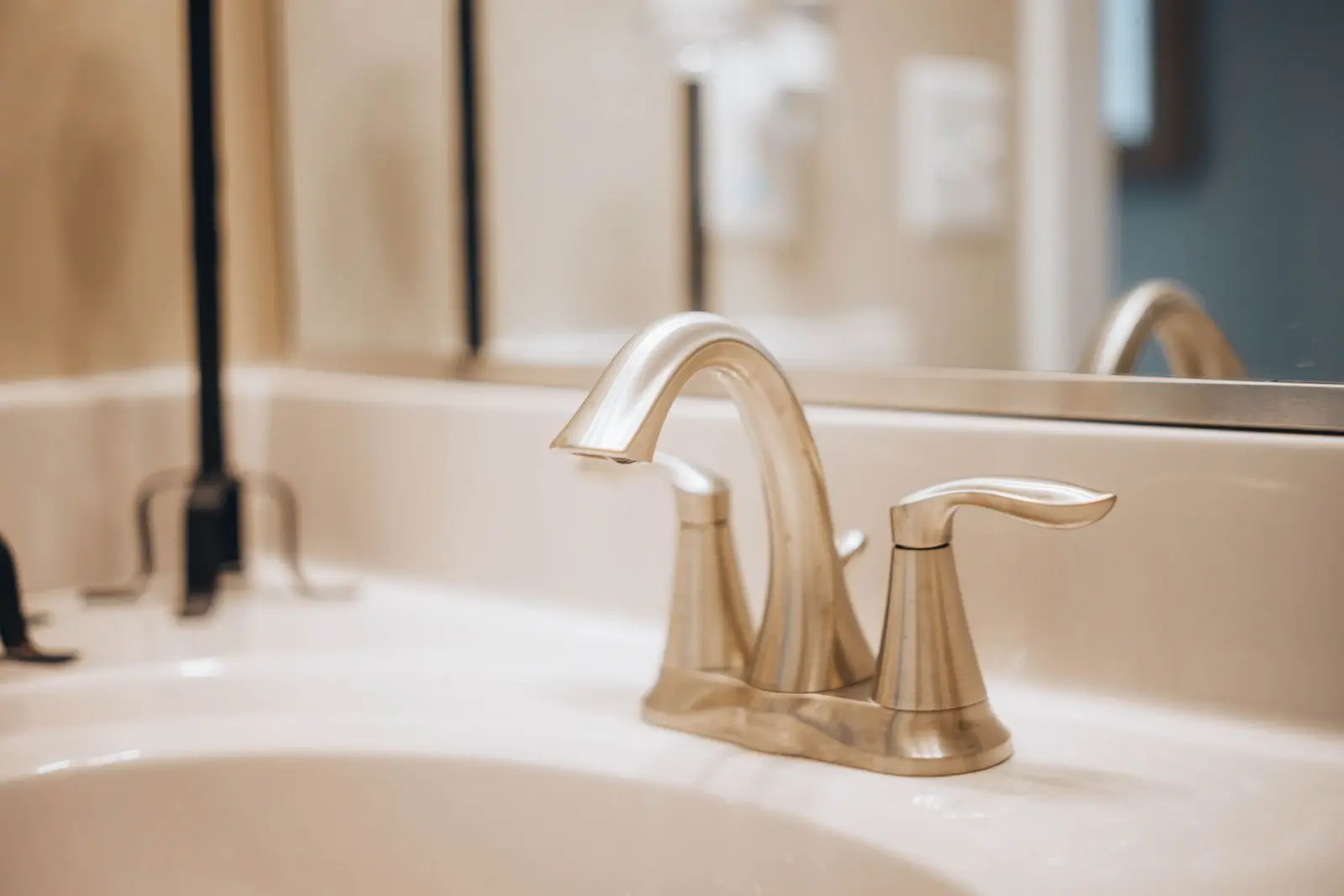
Why some water is so hard
Water picks up calcium and magnesium as it moves through limestone, chalk and desert rock. That's why water is generally hard across the Southwest, Texas, Florida and much of the Midwest, and softer in New England, the Southeast and the Pacific Northwest. Above about 7 grains per gallon (120 mg/L) is considered hard, and some Southwest systems report well into the teens. Your provider's annual water quality report lists your number.
What scale does where you can't see it
- It settles in water heater tanks, making them rumble and wasting energy.
- It lines tankless heat exchangers and triggers error codes.
- It sticks faucet cartridges and toilet fill valves.
- It clogs dishwasher and washing machine inlet screens.
Cleaning what you can see
Soak shower heads and aerators in white vinegar for an hour, then scrub. For glass, use a vinegar-water mix or a descaling cleaner made for your finish. Test on stone first, because acid etches marble and travertine.
Stopping it
A water softener removes hardness minerals from all the water that passes through it. Many homes in hard-water areas have a pre-plumbed softener loop in the garage or basement. Reverse osmosis at the kitchen sink handles drinking water.
When to call a plumber
- Your water heater rumbles or your tankless unit shows scale errors.
- You want a softener installed, or a loop added where none exists.
What the plumber does: see water softener installation.
Common questions
Is hard water safe to drink?
Yes. Hardness is a nuisance and a maintenance problem, not a health hazard. Taste is a separate issue that RO or carbon filtration addresses.
Do salt-free conditioners work?
Some reduce scale formation on surfaces but don't remove hardness. Results vary, so ask for independent test data before buying.
Editorial note: this guide is general information for homeowners, not a diagnosis. Conditions vary by home, so a licensed plumber should confirm the cause before any repair.